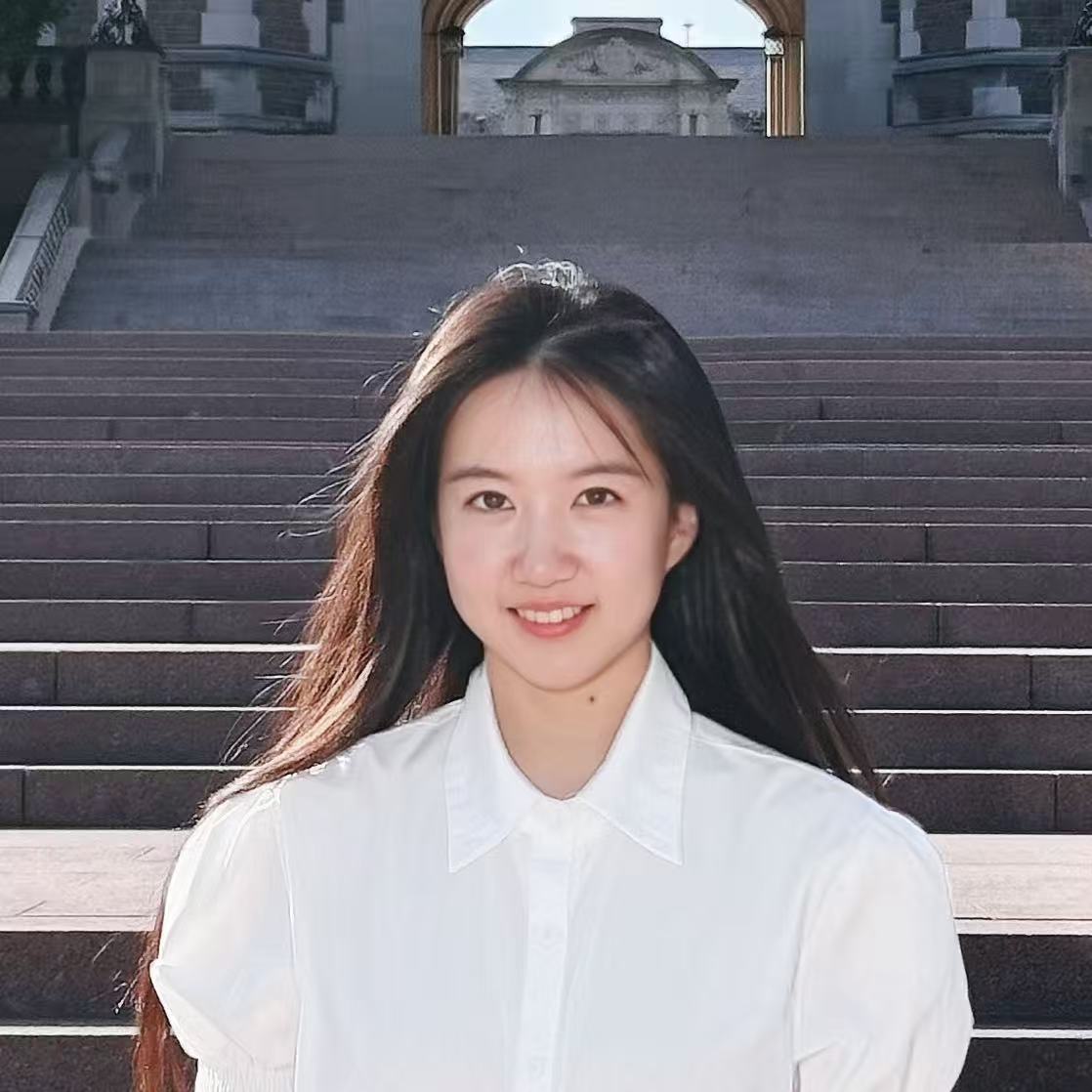
Ziqi Xu
I am a fifth-year Ph.D. student in Computer Science at Washington University in St. Louis, advised by Prof. Chenyang Lu in the AI for Health Institute. My research focuses on multimodal and trustworthy AI for healthcare, with the goal of supporting clinical decision-making. Prior to my Ph.D., I earned my Bachelor’s degree in Computer Science and Mathematics from WashU, graduating summa cum laude. During my undergraduate studies, I conducted research under the guidance of Prof. Lu on machine learning for healthcare.
Research Interests
My research focuses on developing reliable and deployable AI systems for healthcare. I am particularly interested in the following directions:
- Trustworthy and Uncertainty-Aware Machine Learning: I design methods to quantify uncertainty in both traditional models and large language models. My research introduces modality-specific uncertainty estimation and reliability-aware fusion strategies for safer deployment in clinical decision-making.
- Multimodal AI for Healthcare: I develop predictive models that integrate wearable sensing data, ecological momentary assessments, structured electronic health records and unstructured clinical notes by leveraging complementary information across modalities and modeling their interactions.
- EHR-Based Prediction and Patient Phenotyping: I apply machine learning to electronic health records, clinical surveys, and population health data to predict clinical risk, identify patient phenotypes through clustering, and support treatment decisions.
I collaborate with interdisciplinary teams across Anesthesiology, Neurosurgery, and Public Health, with applications spanning surgical outcome prediction, treatment effect estimation, disease phenotyping, and global health.
News
My proposal, “When Should Clinical AI Agents Act? Uncertainty-Aware Delegation for Reliable Decision-Making,” was selected for Anthropic’s AI for Science program, receiving $5,000 in credits to support research on trustworthy AI agents for clinical workflow. Read more in the WashU McKelvey Engineering press release.
I am happy to serve as a Graduate Student Advisory Board Member for the WashU Center for Career Engagement (2026–2027).
I wrapped up my summer internship at Apple in San Diego, where I worked on applied agentic workflows for hardware, and was invited to give my final presentation at Apple Park.
I presented “Using AI to Predict Post-Surgical Headache Improvement for Chiari I and Syringomyelia” at the Chiari Type I Annual Scientific Update alongside Dr. David Limbrick, Dr. Helia Hosseini, and Dr. Gabriel Haller.
My co-first-author work with Salim Yakdan, Real-Time Symptom and Wearable Monitoring May Improve Prediction of Postoperative Recovery in Lumbar Spine Surgery Beyond Standard Measures, has been published in Neurosurgery.
I was invited to present “Beyond Prediction: Trustworthy Multimodal AI for Pain” at the #Pain2026 Workshop: Artificial Intelligence and Pain, hosted by the Gulf Coast Consortia.
I was invited to present our work “Using AI to Predict Post-surgical Headache Improvement for Chiari I and Syringomyelia” at the 2026 THINK TANK Meeting in San Antonio, TX.
I will join Apple as a summer intern in San Diego, working on applied machine learning for display products. I’ll be focusing on leveraging large language models and transformer-based systems to support real-world products.
My work with Sizhe Wang (first author), CURA: Clinical Uncertainty Risk Alignment for Language Model–Based Risk Prediction, has been accepted to the Proceedings of the Annual Meeting of the Association for Computational Linguistics (ACL) 2026 main conference. This work was also featured in a press release.
My work with Dr. Jingwen Zhang (first author), Addressing Cohort Variability with Adaptive Fusion of Wearable and Clinical Data, has been accepted to ACM Transactions on Computing for Healthcare (HEALTH). This work was also featured in a press release.
I successfully defended my Ph.D. dissertation proposal on Trustworthy Multimodal AI for Personalized Healthcare!
As first author, I presented my work Incorporating Uncertainty in Predictive Models Using Mobile Sensing and Clinical Data at UbiComp 2025 in Helsinki, Finland.
My work with Claire Najjuuko (first author), Patterns of Maternal and Child Health Services Utilization and Associated Socioeconomic Disparities in Sub-Saharan Africa, has been accepted to Nature Communications. This work was also featured in a press release.
My work with Ben Warner (first author), Utilizing Semantic Textual Similarity for Clinical Survey Data Feature Selection, has been accepted to Findings of ACL 2025 (Vienna, Austria).
In collaboration with Braxton Goodnight, Dr. Dominic Sanford and Dr. Chenyang Lu, our team was selected as a winner of $50k in the Big Ideas Competition. Our project focuses on leveraging AI and multimodal health data to advance personalized and adaptive clinical decision-making.
As first author, Incorporating Uncertainty in Predictive Models Using Mobile Sensing and Clinical Data has been accepted to Proceedings of the ACM on Interactive, Mobile, Wearable and Ubiquitous Technologies (IMWUT). This work was also featured in a press release.
My work with Claire Najjuuko (first author), Using Machine Learning to Predict Poor Adherence to Antiretroviral Therapy Among Adolescents Living with HIV in Low-Resource Settings, has been accepted to AIDS. This work was also featured in a press release.
As co-first author in collaboration with Dr. Sean Gupta, our paper Using Artificial Intelligence to Identify Three Presenting Phenotypes of Chiari Type-1 Malformation and Syringomyelia has been accepted to Neurosurgery. This work was also featured in a press release.
As first author, I presented my work Predicting Multi-dimensional Surgical Outcomes with Multi-modal Mobile Sensing at UbiComp 2024 in Melbourne, Australia.
As first author, Predicting Multi-dimensional Surgical Outcomes with Multi-modal Mobile Sensing has been accepted to Proceedings of the ACM on Interactive, Mobile, Wearable and Ubiquitous Technologies (IMWUT). This work was also featured in WashU News and Health IT Analytics.
I successfully passed my Ph.D. Qualifying Exam!
As co-first author in collaboration with Dr. Jacob Greenberg and Dr. Madelyn R. Frumkin, our paper Preoperative Mobile Health Data Improve Predictions of Recovery from Lumbar Spine Surgery has been accepted to Neurosurgery.
My work with Dr. Xue Bing (first author), Assisting Clinical Decisions for Scarcely Available Treatment via Disentangled Latent Representation, has been accepted to KDD 2023 (Long Beach, CA). This work was also featured in a press release.
I am excited to start my Ph.D. at Washington University in St. Louis, advised by Dr. Chenyang Lu.
Selected projects
- Uncertainty Quantification & Trustworthy AI
- Multimodal Mobile Sensing & Wearables
- EHR & Clinical Data: Prediction and Patient Phenotyping
Uncertainty Quantification & Trustworthy AI
Methods that let clinical models recognize when they may be wrong — from modality-specific uncertainty in multimodal fusion to uncertainty–risk alignment in language models — so predictions can be trusted, or deferred to clinicians, appropriately.
Incorporating Uncertainty in Predictive Models Using Mobile Sensing and Clinical Data: A Case Study on Persistent Post-surgical Pain
Proceedings of the ACM on Interactive, Mobile, Wearable and Ubiquitous Technologies (IMWUT), Vol. 9, No. 2, Article 58, June 2025 (33 pages)
Presented at ACM UbiComp / ISWC 2025 (Helsinki, Finland).
Multimodal Mobile Sensing & Wearables
Predictive models that fuse wearable signals, ecological momentary assessments, and clinical data to forecast multi-dimensional recovery and pain outcomes for surgical patients.
Predicting Multi-dimensional Surgical Outcomes with Multi-modal Mobile Sensing: A Case Study with Patients Undergoing Lumbar Spine Surgery
Proceedings of the ACM on Interactive, Mobile, Wearable and Ubiquitous Technologies (IMWUT), Vol. 8, No. 2, Article 81, June 2024 (30 pages)
Presented at ACM UbiComp / ISWC 2024 (Melbourne, Australia).
EHR & Clinical Data: Prediction and Patient Phenotyping
Machine learning on structured EHR, survey, and population health data to discover patient subgroups through clustering and phenotyping, predict clinical risk, and support treatment decisions.
Honors & Awards
- Anthropic AI for Science Program, $5,000 research credit award (proposal lead), 2026
- WashU Big Ideas Competition, $50K Research Award (team member), 2025
- Doctoral Honors, top 15–20% in WashU’s Periodic Review of Doctoral Students, 2024–2026
- Outstanding Reviewer, Journal of Digital Health, 2025
- Dean’s Select Ph.D. Fellowship, Washington University in St. Louis, 2022–2027
- Summa Cum Laude, Washington University in St. Louis, 2022
Service & Mentoring
- Program Committee: ACM CIKM Workshop on Large-scale AI for Sensing Systems (LASS) 2026; International Multi-Conference on Artificial Intelligence Technology 2026
- Reviewer: ICLR 2027, ACL Rolling Review 2026; NPJ Digital Medicine, Nature Communications (early-career co-reviewer), ACM Transactions on Computing for Healthcare, Scientific Reports, BMC Medical Informatics and Decision Making, BMC Anesthesiology, Journal of Digital Health
- Community: Graduate Student Advisory Board Member, WashU Center for Career Engagement (2026–2027); Volunteer Organizer, WashU AI for Health Symposium (2024–2026) and AI for Health Venture Day (2026); Test Writer & Tournament Volunteer, WashU Science Olympiad (2026–2027)
- Mentoring: Mentored eight students (Ph.D., M.S., undergraduate, and medical) in multimodal sensing, uncertainty quantification, and clinical machine learning; five mentees co-authored publications, three as first or co-first author